Explanation
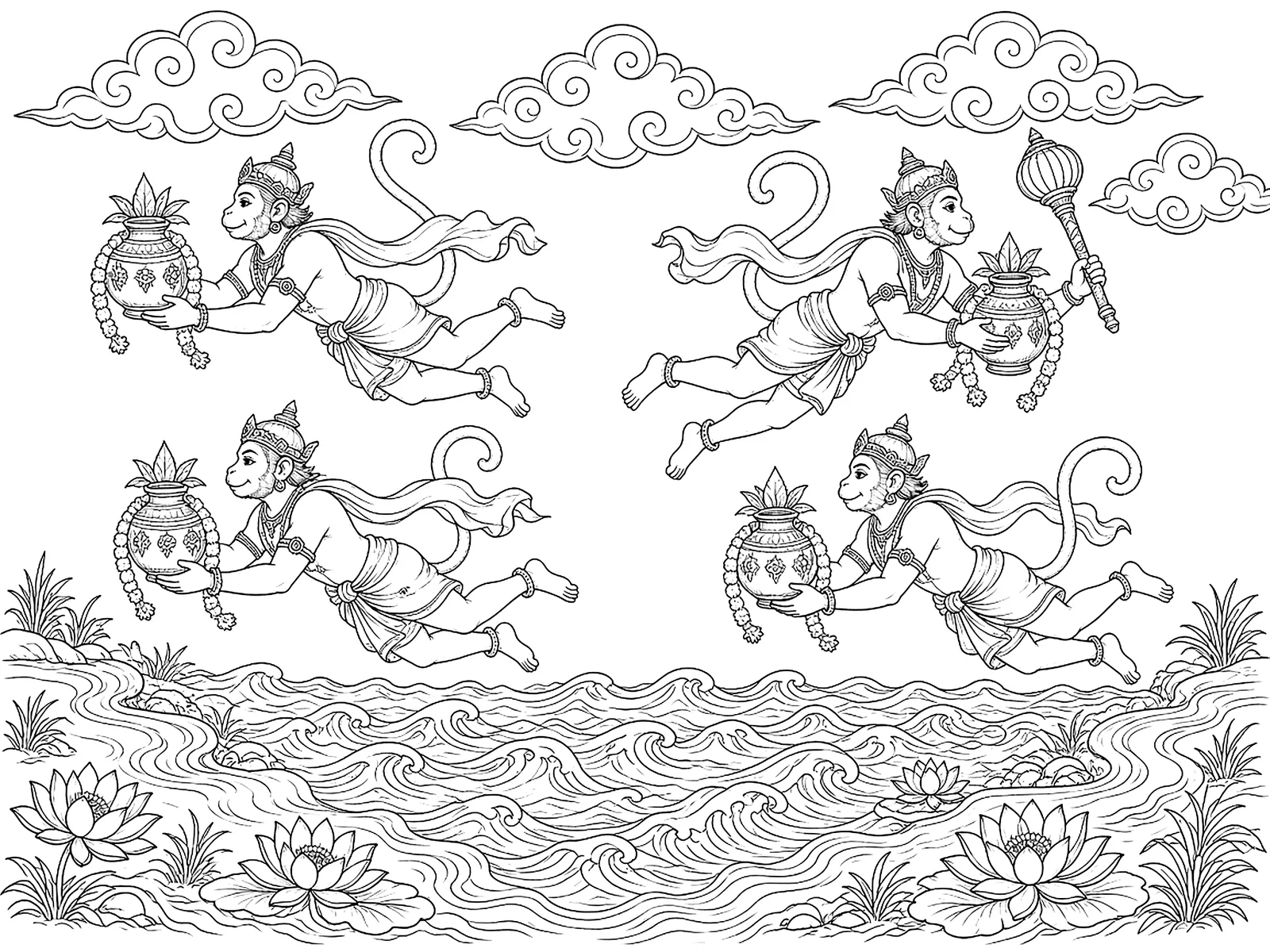
Śatrughna now turns to Sugrīva, the leader of the vānara hosts, and asks him to send out messengers for the water that Rāma's consecration requires. The request is respectful, since Sugrīva is a king and an ally, and practical, since the vānaras are the only ones able to cross the oceans and mountains in a single morning. Notice the way the speech is framed: the whole abhiṣeka becomes a joint undertaking of the people of Ayodhyā and the friends from Kiṣkindhā and Laṅkā. The one who made the friendship possible is the one for whom the water is fetched, and nobody who helped him is left outside the ceremony.
Detailed Explanation
1. Line 1
उवाच च महातेजाः सुग्रीवं राघवानुजः ।
uvāca ca mahātejāḥ sugrīvaṃ rāghavānujaḥ |
Translation: And the greatly radiant younger brother of Rāghava said to Sugrīva:
Word meanings:
- uvāca (उवाच) – said; perfect, third singular (√वच्)
- ca (च) – and
- mahātejāḥ (महातेजाः) – greatly radiant; बहुव्रीहि compound, nominative singular
- sugrīvam (सुग्रीवम्) – to Sugrīva; accusative singular
- rāghavānujaḥ (राघवानुजः) – the younger brother of Rāghava; राघव + अनुज, nominative singular
Interpretation (elaborative):
The speaker is hidden behind a title: rāghavānujaḥ, "the younger brother of Rāghava", and the adjective mahātejāḥ, "of great radiance". The commentary takes him to be Śatrughna, who has just been giving orders, though the word could in principle apply to Bharata or Lakṣmaṇa as well. The poet does not say, and this indirection, calling a man only by his relation to Rāma, makes all three brothers appear as extensions of the elder. The addressee is Sugrīva, to whom the speaker turns with the verb uvāca, "said". It is noticeable that the one who asks the vānara king for help is the youngest prince, and that the request is made as one king's household speaks to an allied king. The line holds back the request itself until the second line, so the introduction has the dignity of a formal approach. There is a further effect in the adjective mahātejāḥ, which is the same epithet given to Sugrīva in verse 31. The poet pairs the two kings by their radiance, so the request is a conversation between equals in splendour.
2. Line 2
अभिषेकाय रामस्य दूतानाज्ञापय प्रभो
abhiṣekāya rāmasya dūtānājñāpaya prabho
Translation: 'For Rāma's consecration, O lord, order messengers to be sent.'
Word meanings:
- abhiṣekāya (अभिषेकाय) – for the consecration; dative singular
- rāmasya (रामस्य) – of Rāma; genitive singular
- dūtān (दूतान्) – messengers; accusative plural
- ājñāpaya (आज्ञापय) – order, command; imperative, causative (ā + √ज्ञा)
- prabho (प्रभो) – O lord; vocative singular
Interpretation (elaborative):
The request is short: abhiṣekāya rāmasya dūtān ājñāpaya, "for Rāma's consecration, have messengers commanded". The verb ājñāpaya is a causative of the root meaning to command, so the speaker does not give the order himself; he asks Sugrīva to give it to his own messengers. This is politeness and also protocol, since the vānaras answer to their king and not to the princes of Ayodhyā. The vocative prabho, "O lord", closes the sentence with respect. The dative abhiṣekāya, "for the consecration", names the purpose first, so the vānara king hears the reason before the task. The messengers are not yet said to be sent for water; that is left to be understood, since an abhiṣeka needs water from distant seas and rivers, and only the vānaras can fly or leap to fetch it before dawn. The sentence is brief, with only five words, and it is the plainest request in the sarga, as though the moment had no need of ornament: the idea is the consecration, and the rest is a matter of getting it done.